

Every source. Usable on arrival.
Connect a source and query it. Everything in between happens as the data lands, once, and none of it is yours to maintain.
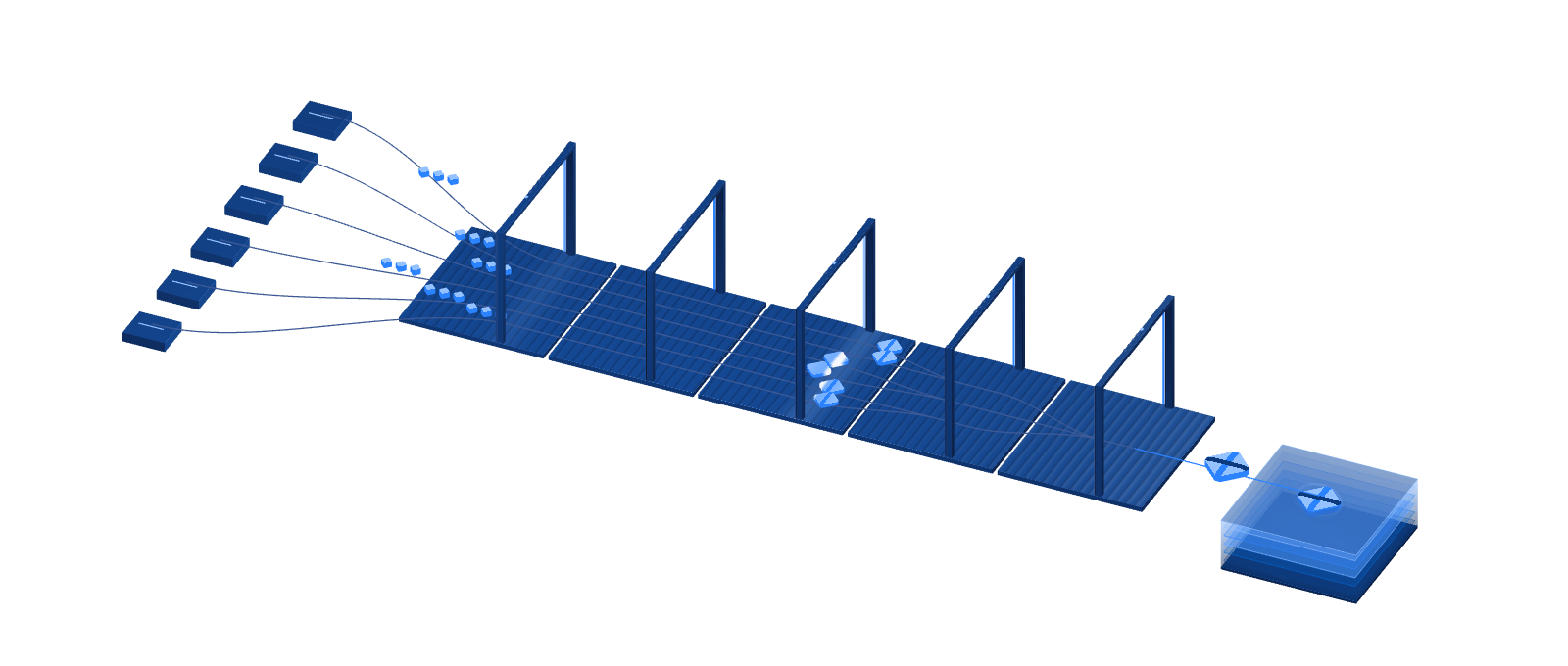
Many sources. One flow.
Select a stage above to explore what happens at its gate.
Collect
Agent, API, or straight from your bucket. No collector tier to babysit.
Optimize
Columnar Parquet, 10 to 20 times smaller. A query reads only the columns it touches.
Catalog
Every source keeps its own columns. Rosetta Stone maps between them.
Learn
What each column holds and how it relates, written beside the data.
Tier
Hot to fast storage, bulk to cheap. Your access pattern decides, not your licence.
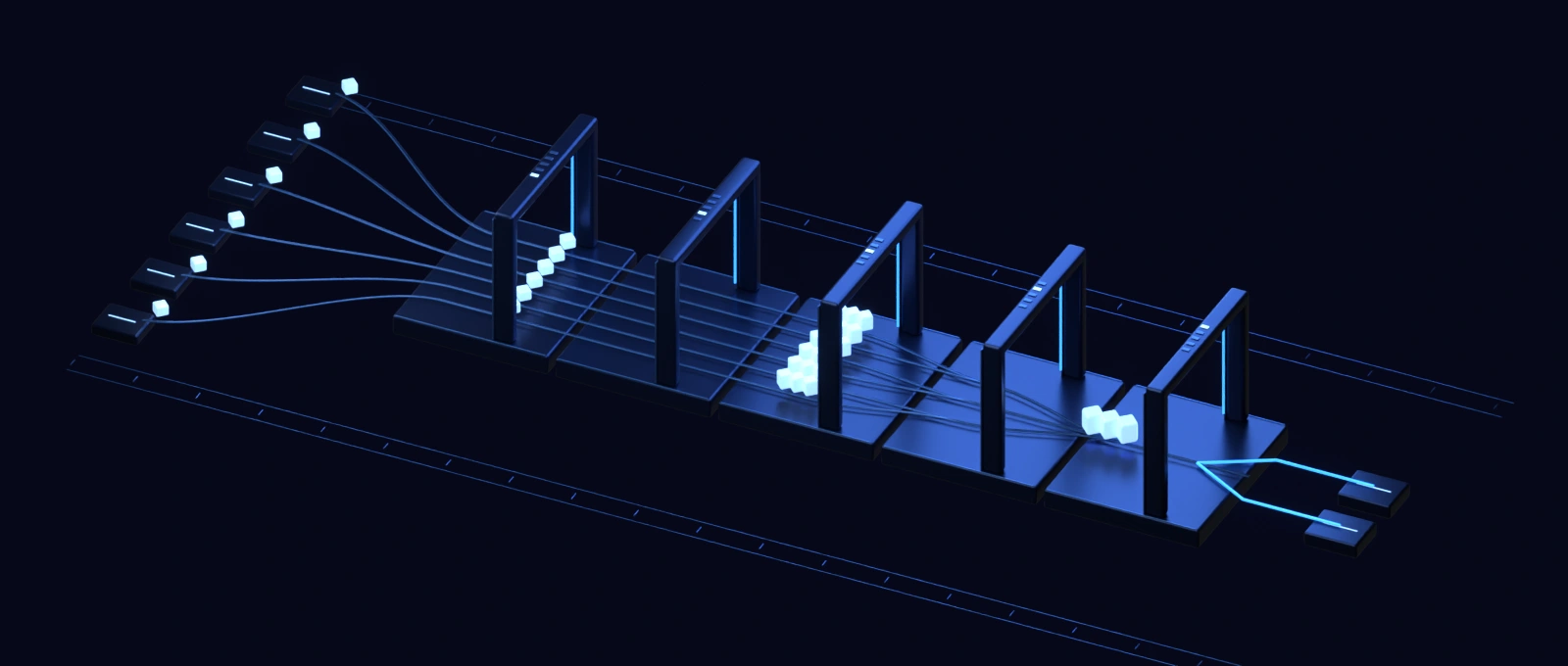
Many sources. One flow. Collect / Optimize / Catalog / Learn / Tier
Column names lie. The data doesn't.
Rosetta is a catalog, a map and a reader that never stops. It records every column of every source you connect, works out what the values actually are rather than what the header claims, and links the columns that mean the same thing across every source you have.
source
10.4.2.19
→
ip address
eu-west-1
→
region
inbound
→
direction
Add a column and it layers in on its own. There is no mapping to write and none to maintain.
A match is not an answer.
One source shows one angle. Integrations give the agents the rest.
Authentication, endpoint, network, cloud, SaaS, custom
Threat intelligence, identity providers, asset inventory
Ticketing and cases, chat, response actions
Costs down. Coverage up.
You stop choosing what to keep.
Volume is a cost decision, not a coverage one.
Cost tracks use, not volume.
Per node, not per GB. Ten to twenty times smaller on disk.
Detections outlive the source changing.
A rule written last quarter still matches.
The first answer comes in minutes.
No parsing project. No services engagement.